Mental Health and Crisis Supports

Durham District School Board (DDSB) considers well-being and positive mental health fundamental to student achievement. Students and/or their caregivers are encouraged to reach out to someone at school if they are feeling overwhelmed or discouraged Support and Crisis Lines are also available.

Durham District School Board (DDSB) considers well-being and positive mental health fundamental to student achievement.

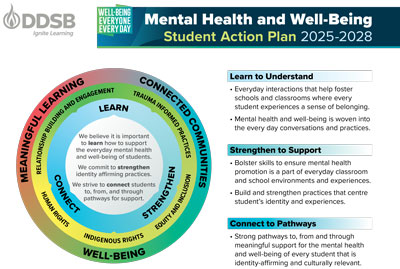
Mental Health and Well-Being Action Plan

This plan focuses on creating the foundational conditions that support well-being and positive mental health. 

The actions embedded in this plan include Learn-Strengthen-Connect.

  • We believe it is important to learn how we can support the everyday mental health and well-being of students and staff.
  • We commit to provide for our students and staff inclusive, identity affirming, and culturally relevant supports as needed.
  • We strive to connect all students and staff to, from, and through the pathways for those supports.

This plan was created in an effort to maintain our commitment to fostering well-being for all students.

Reach out to someone at your school if are struggling with anxiety, depression or any other mental health issue. A guidance counsellor, student success teacher, special education teacher or classroom teacher can help.

We also have a team of professionals available to assist which include social workers, psychologists and psychological associates, along with mental health and addiction nurses and community-based mental health workers.

Staff from DDSB Psychological Services and Social Work Services are available to speak with students or their parents/guardians during the school year (September - June).  When there is a need to talk things through or to seek more immediate advice about directions for support, please connect with KidsHelpPhone.  

exclamation mark icon


If the need or risk is imminent, contact 911 or call KidsHelpPhone at 1-800-668-6868


Mental health resources

Durham Region offers a variety of crisis help centres and support lines. The following resources are for caregivers and students.

Talking About Mental Illness is a community organization that works to end the stigma around mental illness.

Anxiety Canada provides youth and caregivers with resources, information and interactive tools for coping with stress and anxiety.

Children's Mental Health Ontario provides resources, conferences and information to parents and children about mental health.

AboutKidsHealth provides information about a variety of mental health concerns including anxiety, depression and eating disorders. They offer warning signs and symptoms as well as resources for treatment and support.

The ABCs of Mental Health provide parents with ways to respond when their children experience stress, anxiety and other mental health issues.

The Durham Region Health Department provides resources to parents to support health and well-being.

Reaching In – Reaching Out creates programs that teach adults and children resiliency thinking and coping skills to help deal with mental stress.

Resources for students

If you are a student, you may find these resources helpful:

Mind Your Mind provides you with help identifying mental illness and providing resources for support and treatment.

The Be Safe App allow you to make a safety plan and helps you find appropriate help in a crisis. This application is available for IOS and Android devices.

My Tool Kit is an interactive online tool that uses videos, mobile apps and education modules to provide mental health support.

What is mental health?

Mental health is a state of well-being that helps individuals reach their potential. When we have positive mental health, we can cope with the normal stresses of life, work productively and make contributions to our communities.

Mental health problems are emotional, behavioural and brain-related problems that interfere with development, relationships and functioning. It's sometimes hard to recognize mental health problems. They can look like other difficulties, for example: aggression, avoidance or withdrawal.

Mental Health exists on a continuum. People can fluctuate between wellness and illness at different times in their life. When we recognize signs of mental health problems early and provide the right supports quickly, we can improve the outcomes for children and youth.

Early recognition of mental health problems and connection with helpful resources is important. If you are concerned about your child's mental health or if you are a student who is concerned about your own mental health, you can talk to someone at your school. Supportive school-based strategies, referrals to our Board mental health professionals and information about community mental health providers can be offered through our schools. Promotion of positive mental health and development of social and emotional learning strategies is an ongoing focus for the DDSB.

Building resiliency

Resiliency is the ability to handle life's ups and downs in positive ways, and the ability to deal with disappointments and bounce back from challenges. You can develop skills for resiliency when you are successfully engaged in school activities, have opportunities to develop positive relationship skills, and strengthen your confidence in problem solving. Adults, including parents and teachers, play an important role in helping a student engage in the school environment and access resources needed for success and wellbeing.

The Durham Region Health department provides resources to help kids and teens develop resiliency.



Crisis Help and Support Lines

The Durham District School Board (DDSB) wants to ensure that you have all of the resources you need to handle a crisis. Our students can experience a crisis in many ways, including:

  • Bullying
  • Emotional or physical abuse
  • Neglect
  • Sexual assault
  • Substance abuse and addiction
  • Depression

If you are experiencing a personal or situational crisis, you can call:

  • 911 or visit the nearest emergency department
  • Kids Help Phone at 1-800-668-6868 for emotional support on a variety of issues. They offer text and online chat services as well.
  • ConnexOntario at 1-866-531-2600 for addiction, mental health and gambling treatment services.
  • Distress Centre Durham at 905-430-2522 for 24-hour help. They run a series of specialized phone lines for suicide survivors, LGBTQ+ and community support.
  • Durham Region Mobile Crisis Service at 1-800-742-1890 or 905-666-0483 for free confidential support during a crisis.
  • Good2Talk at 1-866-925-5454 for free and confidential professional counselling and referrals for mental health, addiction and well-being.
  • ONTX Ontario Online or Distress Line: 905-430-2522, Text Crisis Services by texting 258258.
  • Youthline at 1-800-268-9688 for confidential LGBTQ+ peer support. They offer telephone, text and chat services.

Crisis support centres

Durham Region has crisis centres that can provide you with a range of crisis services.

You can report abuse to Durham Children's Aid Society. They support children experiencing emotional, physical or sexual abuse or neglect.

The Crisis Intervention Team at Oshawa Hospital offers addiction, mental health and gambling treatment services. You will be assessed by the team and then referred to a health care professional.

The NASC offers counseling and healing services to indigenous women and their families. This is for women experiencing abuse or who have been abused in the past. They use traditional Anishnaabe spirituality combined with other methods of healing.

The DRCC provides resources for those who have experienced rape. This includes a crisis support line and instructions on evidence collecting, reporting and seeking medical assistance.

CAMH provides resources, individual and group addiction treatments, assessments, family support and psychiatric consultations. You can contact CAMH directly to receive service. They also accept referrals from community members, such as physicians, community agencies or schools.

DDSB offers peer support programs for students experiencing loss through death, divorce or any painful family transition.

Many schools in the DDSB have a Gay Straight Alliance (GSA) to help support students that are experiencing homophobic bullying. Talk with your school administration to find out if there is a GSA at your school.