

Student and Family Support Office
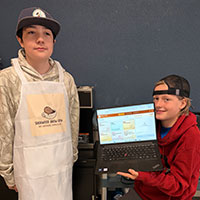
The DDSB knows that strong schools are built on strong partnerships with families. When questions are answered, concerns are addressed, and families feel heard, students are better supported to learn, grow, and succeed. The DDSB’s Student and Family Support Office (SFSO) launched in September. The SFSO provides families with a dedicated point of contact for questions or concerns related to their child’s education, particularly when a matter has not been resolved at the school level or requires support from another area of the Board.
The office complements existing school-based relationships, while helping families connect with the right supports and resources across the system
The SFSO helps streamline communication, coordinates responses with appropriate staff, and ensures inquiries are acknowledged and addressed in a timely and consistent way.
A Shared Commitment to Inclusive Learning
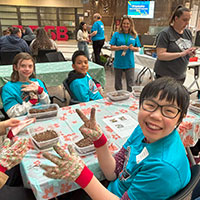
The Durham District School Board was proud to host its first-ever Special Education Parent/Caregiver Symposium, an inspiring and engaging evening dedicated to informing, connecting, and empowering families. Hundreds of parents and caregivers explored Special Education programming, support services, placement options, and pathways for secondary planning.
More than just an information session, the symposium created a welcoming space for meaningful conversations, questions, and shared understanding, helping families feel confident and supported as they navigate their child’s unique educational journey. The evening also showcased innovative technology tools designed to enhance communication and break down language barriers, ensuring every family can fully engage in their child’s learning experience.
A highlight of the event was the opportunity for families to connect directly with the wide range of professionals who support students across the DDSB. From Child Psychologists and Speech and Language Pathologists to Multi-Language Facilitators and other specialized staff, families gained a deeper understanding of the many supports available beyond the traditional classroom.
This event reflects a growing commitment across the DDSB: that the future of education is inclusive, collaborative, and responsive to each and every student’s needs. By opening our doors and inviting families into these conversations, we are reinforcing a shared goal, that every child feels supported, understood, and set up for success.
Land, Learning, and Community Connection
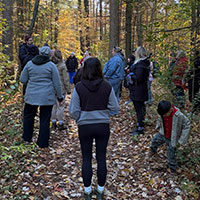
The Durham District School Board’s Indigenous Education and Outdoor Education teams continue to deepen their partnership, expanding land‑based learning opportunities that honour Indigenous knowledge systems, relationships to place, and community connection. This shared work reflects a commitment to learning from the land and with community, ensuring that students, staff, and families experience teachings that strengthen identity, belonging, and stewardship.
Staff learning was enriched through time spent on the land with members of the Mississaugas of Scugog Island First Nation (MSIFN), including Kayleigh Godcharle and Lonny Coons, at the MSIFN sugar bush. Through the full cycle of traditional maple syrup production — from tapping the trees to bottling the final product — educators engaged in teachings rooted in seasonal rhythms, reciprocity, and responsibility to the land. These experiences deepened understanding of how land‑based learning can meaningfully connect curriculum to culture and support student well‑being.
This work extended to families through a two‑day Hide Camp at the Durham Forest Outdoor Education Centre, offered in partnership with MSIFN and Bawaajigewin. Approximately 70 participants joined staff and community partners in traditional hide preparation led by Caleb Musgrave (Hiawatha First Nation) and Kayleigh Godcharle (MSIFN). MSIFN Councillor Jeff Forbes offered support throughout the gathering. In the tipi, Grandmother Kim Wheatley (Shawanaga First Nation) shared stories, teachings, and song, while families also created moccasins with Jessie Charles (MSIFN) and participated in cultural crafts that fostered intergenerational learning and connection.
DDSB students are further engaged in land‑based learning through system‑wide orienteering and the Watershed Festival, building teamwork, leadership, and environmental responsibility.