

30 Credits My Way (Graduation)
30 Credits My Way puts students and families in the driver's seat, empowering them to navigate their high school pathway with confidence. At Durham District School Board, the journey isn't just linear—it's about discovering the many options available to suit individual learning styles and aspirations.
Students can choose to accelerate their credit completion pace, or opt for flexible timetables tailored to their unique learning needs. By taking the driver's seat, students and families can explore diverse opportunities like Co-op placements, specialized programs such as RELC and SHSM, international language programs, and alternative learning formats like night school, summer school and eLearning.
With comprehensive Grade 9-12 courses and pathways available, students take control of their educational journey through backward design, a process that starts with identifying their desired outcomes and works backward to determine the steps needed to achieve them; they can customize their courses, ensuring alignment with their passions and goals. By understanding and embracing these options, students and families embark on their high school journey that is not only enriching but also empowering, setting the stage for lifelong success.
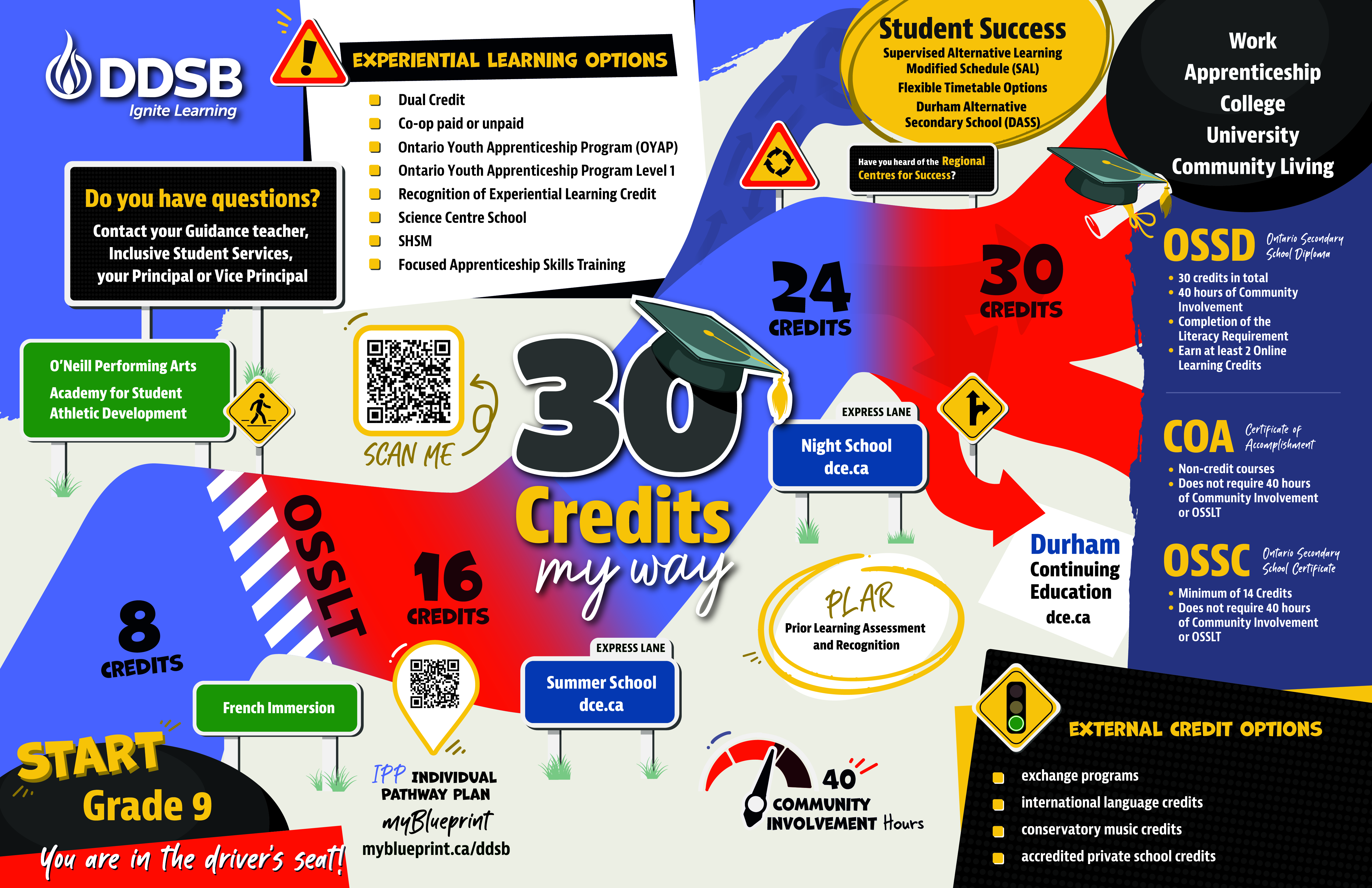
'Credit Opportunities'
Navigating the Road Map


GRADUATION
Additional OSSD Graduation Requirements


Durham District School Board (DDSB) offers scholarships and awards that you can apply for in your graduating year of high school. Many individual high schools also offer scholarships and awards. Students are encouraged to speak with their Guidance Department at their Home school to access the Scholarships Trades Report and for other additional scholarship opportunities.
Some opportunities are posted on the DDSB website.
2026 Information Nights and Additional Resources
(new date for Sinclair Secondary School)
Durham District School Board (DDSB) provides a variety of resources and transition guides to help students direct their learning. This allows them to receive relevant academic and practical experience regardless of the career pathway they choose.
- 30 Credits My Way Guide
- Pathways to Student Success (provides students, parents, and schools with information on a range of opportunities and individualized pathways to enhance student success.)
- Grade 8 Student Course Selection
Have Questions? Need Support?
Have questions about how 30 Credits My Way can best serve your educational needs and goals? We understand that embarking on a personalized learning journey may raise queries or uncertainties. Whether you're seeking clarity on program options, wondering about course selection, or curious about how to maximize the flexibility offered by this innovative approach, know that support is readily available. Your home school's Principals, Vice Principals, Teachers, and Guidance Counsellors are happy to help address any concerns you may have. Additionally, for further assistance, additional support is available at the Education Centre via the Teaching and Learning Department, ensuring that you have the information and support needed through your journey in high school.
Contact the Student Success and Curriculum department: sscdepartment@ddsb.ca